Making plant-based milk at home can be approached in several ways. Over time, I’ve found that the simplest and most reliable method is to prepare a smooth base using a soup maker, then strain it.
This method creates clean, additive-free plant milks that come together quickly and keep well in the fridge for up to 5–6 days.
One of its biggest advantages is flexibility. You can make milk from coconut alone, or combine it with grains such as millet, oats or rice for a different texture and flavour. It also works beautifully with nuts like cashews or almonds, as the blade blends everything into a smooth, even base.
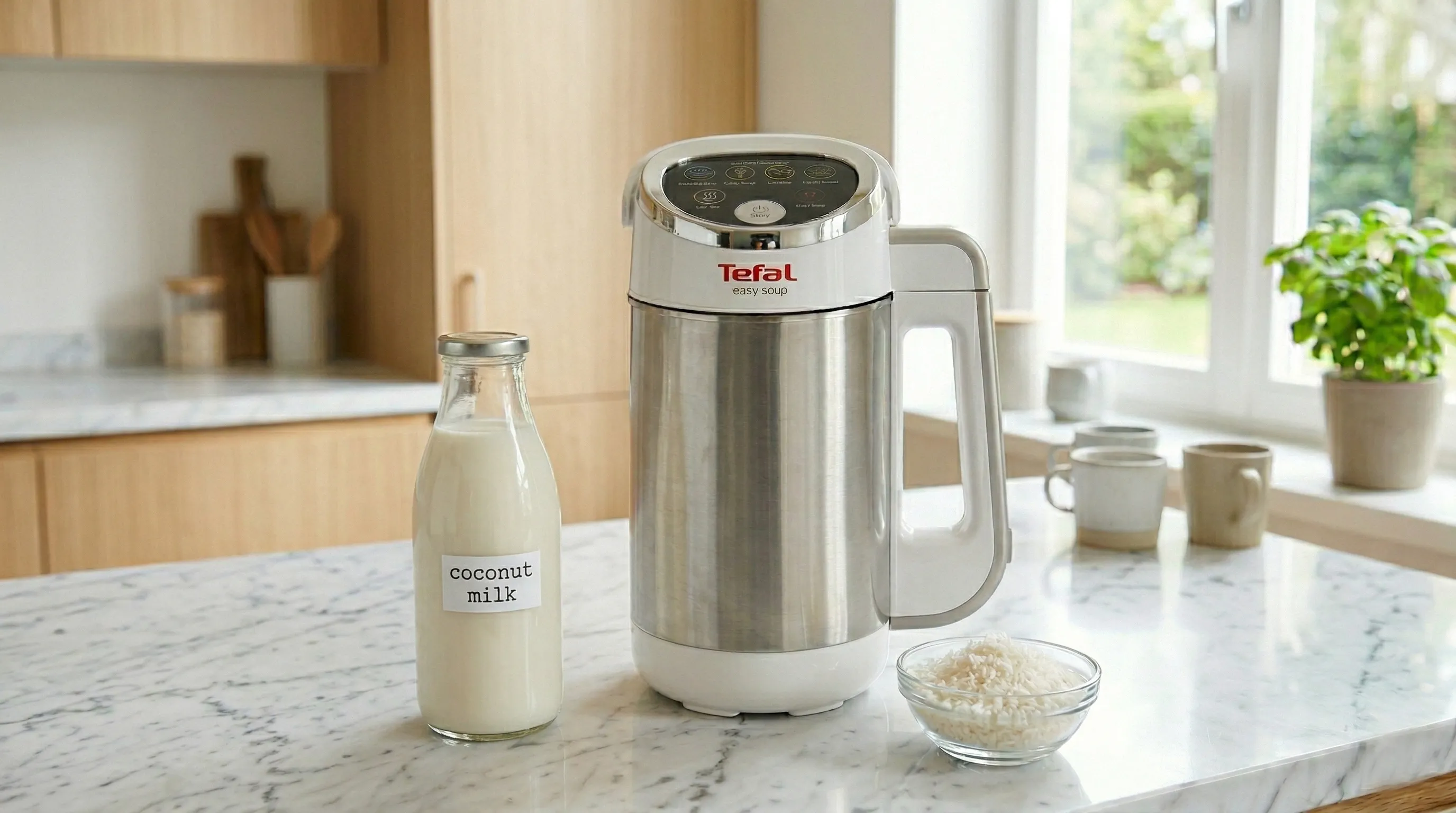
For this method, I’ve been using a soup maker for years, and it has proven to be one of the simplest and most reliable ways to prepare plant milk at home.
I personally use the Tefal Easy Soup Soup Maker (find here), which sits comfortably in the mid-range, yet delivers smooth, consistent results with very little effort.
Another advantage is its construction — the blade and internal parts that come into contact with hot liquids are made from metal rather than plastic, which makes it a more reassuring choice for everyday use.
The process itself is very simple.
Add the ingredients to the soup maker, then fill with water up to the maximum level. I use the “soup with pieces” setting, as it allows the mixture to cook a little longer, helping to soften the ingredients and create a fuller, more rounded flavour.
Once the programme has finished, I run the “blend” function, which processes everything into a smooth base.
This is then strained to create a clean, smooth plant milk.
Once the programme has finished, remove the lid and allow the milk to cool to a lukewarm temperature.
Strain either through a fine metal sieve, or line the sieve with a cheesecloth for an even smoother result.
For simple coconut milk, I usually strain it through a fine metal sieve, which gives a perfectly smooth, silky texture.
Transfer the strained milk into a well-sealed glass container and store in the fridge for up to 4–6 days.

Everyday Variations
Once you understand the process, you can vary the ingredients depending on the flavour and texture you prefer. Here are a few simple combinations I use most often:
Coconut Milk
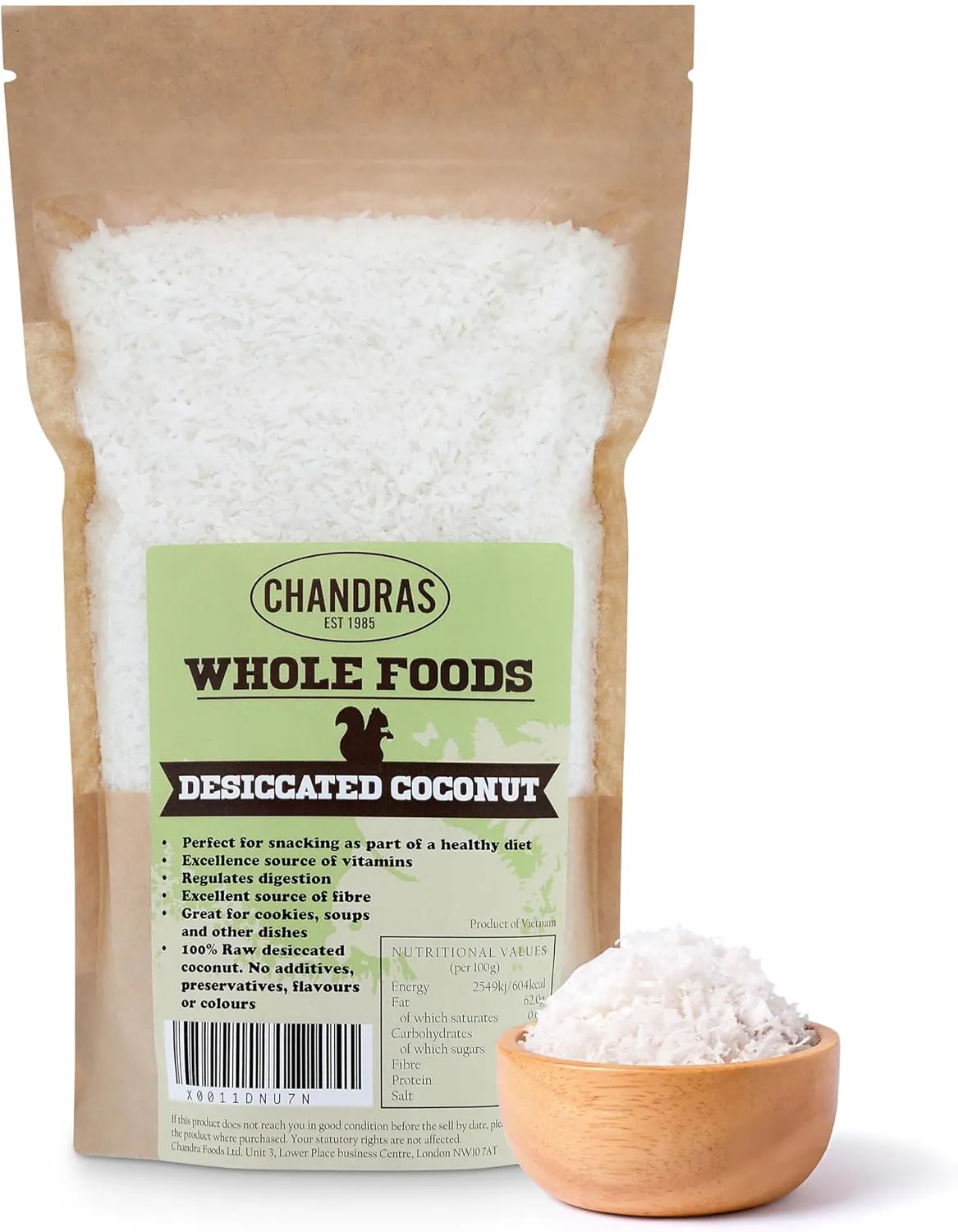
- 50 g organic desiccated coconut
- A pinch of salt Water up to the maximum level
Coconut & Millet
- 30 g organic desiccated coconut
- 30 g millet
- A pinch of salt
Water up to the maximum level
Rinse the millet thoroughly under running water before use to remove any bitterness.
Tiger Nut & Coconut
- 30 g desiccated coconut
- 30 g tigernut flour
- A pinch of salt
Water up to the maximum level
Oat & Cashew Milk
- 30 g oats
- 10–15 g cashews
- A pinch of salt
Water up to the maximum level
Rice & Coconut Milk
- 30 g rice
- 20 g desiccated coconut
- A pinch of salt
Water up to the maximum level
Rinse the rice well before use for a cleaner flavour.
Cashew Milk
- 40 g cashews
- A pinch of salt
Water up to the maximum level
Tips:
For grain-based milks, adding a small amount of nuts or coconut helps create a smoother, more stable texture — without the need for emulsifiers like lecithin.
If using nuts, soaking them beforehand can result in a smoother, more balanced milk.
For a thicker, creamier result, simply use less water (for example, filling closer to the minimum level rather than the maximum).












 way


